IN CONVERSATION 02 | ANDREA CREWS
upcycling pioneer and an iconic figure in MILITANT fashion, Maroussia Rebecq has shaped a world where ARTISTIC CREATION and activism are inseparable. Through Andrea Crews, she has DECONSTRUCTED fashion norms by infusing them with a collective and experimental energy.
Her journey , from artist squats to Fashion Week runways, embodies a radical approach where clothing becomes a tool for both aesthetic and social transformation.
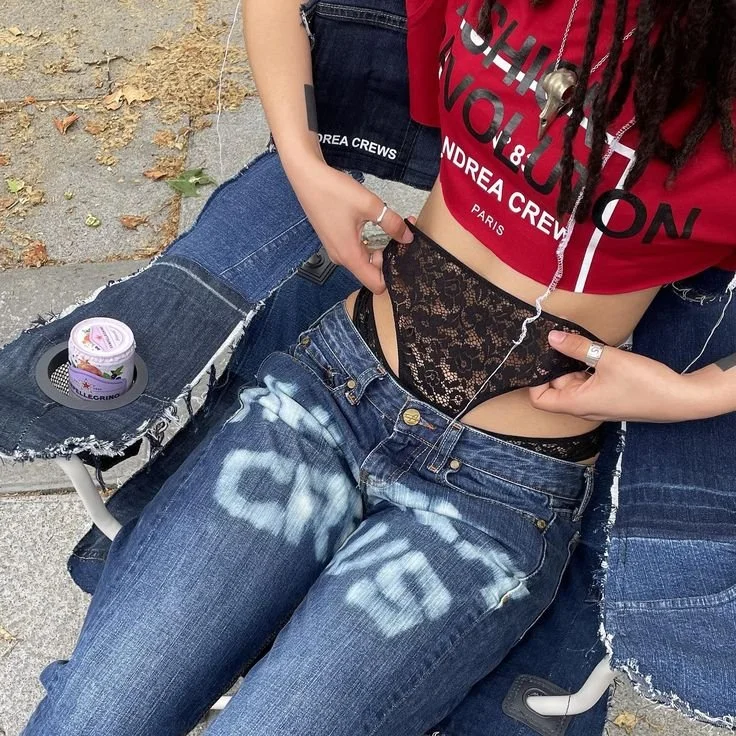
Hi Maroussia, how are you?
Hey MaiKhanh, I’m good, and you? Wait, I’m going to put together a mini look, a mini face.
Hold on, transformation. I think this will make a great intro: the power of clothing.
I’m great, thanks! How was the character and movement of Andrea Crews born?
I was a young artist arriving in Paris, and I created Andrea Crews as a kind of superego who could approach people and talk about me.
At Palais de Tokyo, they offered me to do whatever I wanted. I decided to showcase Andrea Crews’ activities, which were many, like a creation agency.
I had ideas for music, publishing, exhibitions, and fashion.
The fashion project, it was the idea of bringing in tons of second-hand clothes—this was in 2002—so 8 tons in the entrance of Palais de Tokyo, a small workshop, and we invited people to rework the materials to create new pieces. That’s when I put a name to “upcycling” and launched my first collective collection.
Our slogan was Fashion Art Activism.
It’s a strong stance on both social and environmental issues, to think of fashion this way.
Andrea Crews came to life in art spaces through performances, we were making clothes but in an artistic and performative way.
Then one night, I pulled an all-nighter, reordered tons of second-hand clothes, and I had a workshop in a squat called La Générale. People started coming every day to work with me, asking for internships, why not? I started having a couture workshop practice.
It was to challenge traditional fashion structures that there was no “great designer.”
When you make clothing, there are many people working for that.
Andrea Crews was a masked fictional character, I invited everyone to embody Andrea Crews and define their own values through it. That was in 2006 , our first sewing workshop.
2009, one of my interns, Angie Dinh Van—who would later be my right hand in growing Andrea Crews—started selling clothes, while I had no clue how to do that. Everything had been unique pieces, for me or for performances, but never for sale.
We held our first unofficial Paris Fashion Week show at the Jeu de Paume museum , with only naked girls, it was great.
After that, we developed the brand and set up a studio in Pigalle.
It’s such a beautiful story , we opened squats, a bunch of girls dressed in neon, for ourselves because we didn’t know where to go and we needed to create.
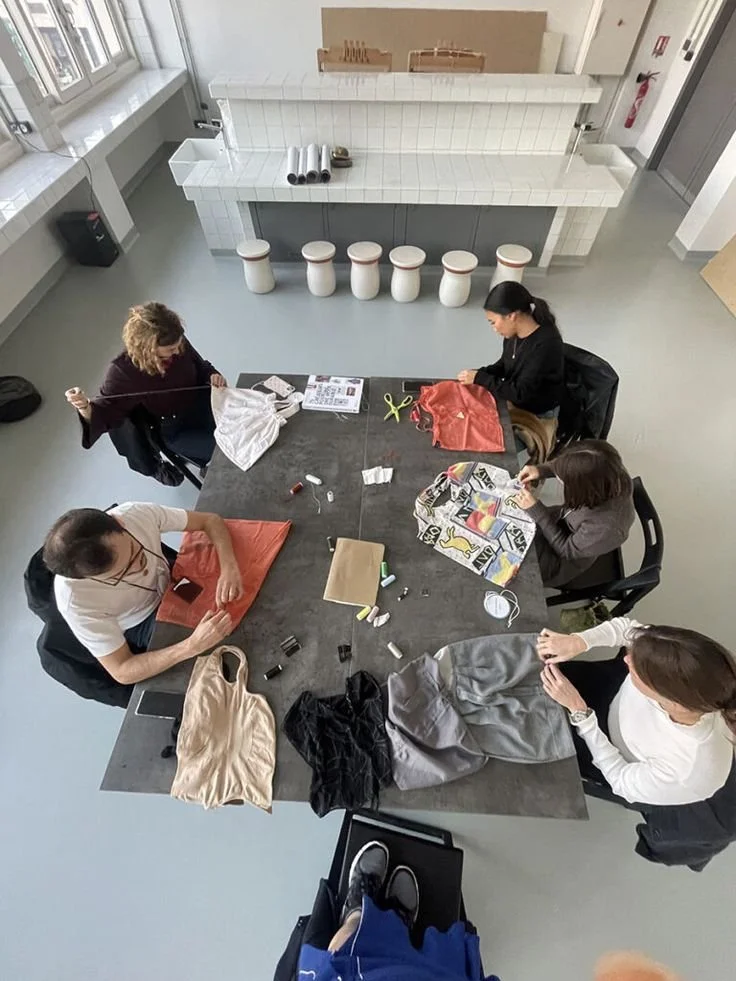
The need for an artistic community.
We structured ourselves like a small company, like a studio, but with no formal training or commercial intent —it was all about joy and play. I learned everything on the go, which gave a strong identity and made it a very unconventional project in its construction and in the many echelons.
Then we became a more classic fashion brand.
In 2014, we entered the official Paris Men’s Fashion Week calendar. That’s when we started producing real collections with 150 pieces and not everything was upcycled.
Upcycling remained at the core of the collections and image.
Until 2020, COVID and so, and we dematerialized Andrea Crews.
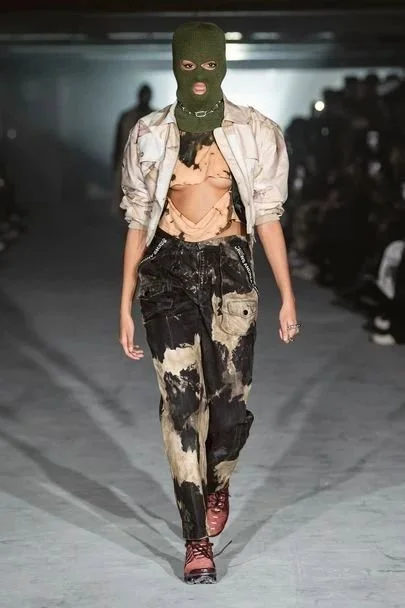
The slogan is Fashion Art Activism. How do these worlds connect?
Clothing has an immense transformative potential. It allows you to step outside yourself, and even outside your social condition.
It’s also the first thing people notice about you, your attitude, clothes change your body.
It’s just 2 different identities, it’s still me, but it allows play. That’s the intimate side that allows us to transform ourselves.
I say activism because we were literally working with “trash clothes”. I love saying that.
Trash means post-overconsumption, people would drop clothes at charity shops to get rid of things they’d bought. Now, with fast fashion, it’s really garbage.
That’s the second thing, giving value to our trash, having a critical view on consumption, and offering a more responsible way to consume.
Then, onthe political side, the way we work, there is this idea of collective.
The Palais de Tokyo performance, I worked both with Chanel, Karl Lagerfeld came by—but also with Joseph Camanga, a political refugee from Secours Populaire.
So from a social perspective, it put people in front of a sewing machine and things happen, leading to incredible exchanges. To be in social creation, that’s the 3rd point.
There was also the notion of casting, showcasing different people, deconstructing to reconstruct beauty canons through, for us it was fluidity, “body positive”. It seems obvious today but talking about 2002, we didn’t have the words for it.
But it’s true, I have always had curvier young women pose, unusual people, people with unique identities who weren’t traditionally considered beautiful, whose beauty isn’t recognised by society.
By valuing them, it totally empowered these people, that’s very strong in Andrea Crews.
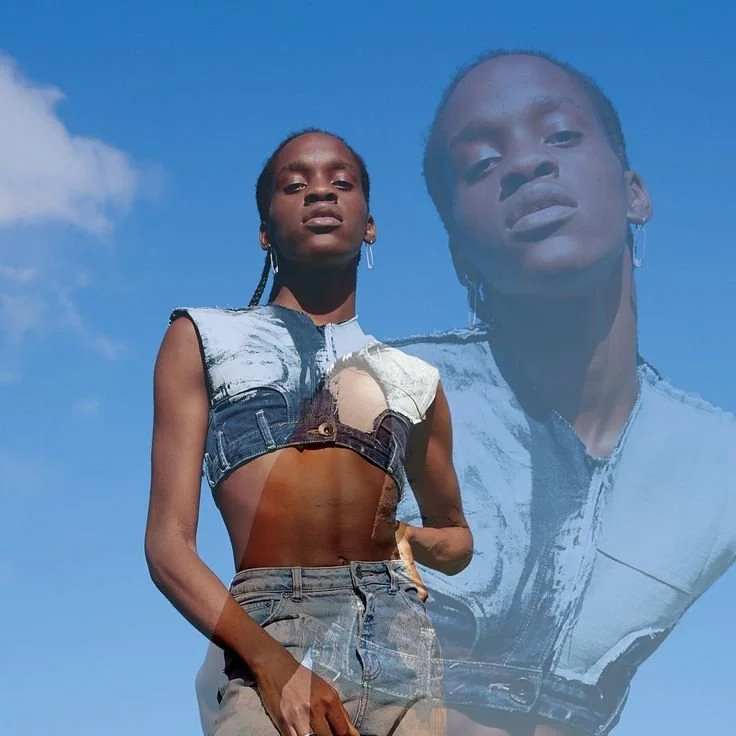
Do you remember the first piece you upcycled?
So I was a fine art student in Bordeaux (Beaux Arts) and the first thing I did was stick my legs into a sweater to turn it into harem pants. My first technique was really that one which I call Upside Down . What happens when you flip things?
It’s a point of view that is a bit more philosophical but also very political, “What happens and how can you perceive things differently?”
Voila, and then the flipped jacket. It’s almost very simple, but immediately becomes very sculptural.
What’s the creative process like in your workshop when exploring second-hand clothing and making new pieces?
I have tons of ideas and impulses. In my creative process, I never do anything alone, I need my audience, and to ask questions.
We look at Upside Down techniques and what if we cut it this way, that way?
I cut fabric like a total brute, and I work with people who know how to sew differently what I’ve deconstructed.
I love to create an impulse but quickly step away.
Then the team has the material and that’s when it fully becomes a collaborative and creative project. They can do what they want, propose what they want.
We collectively see what is good or not, we evaluate production difficulties, and the piece’s overall value.
Upcycling is truly a craft, it takes time and is expensive.
Can you tell us about the Upcycle Solution project?
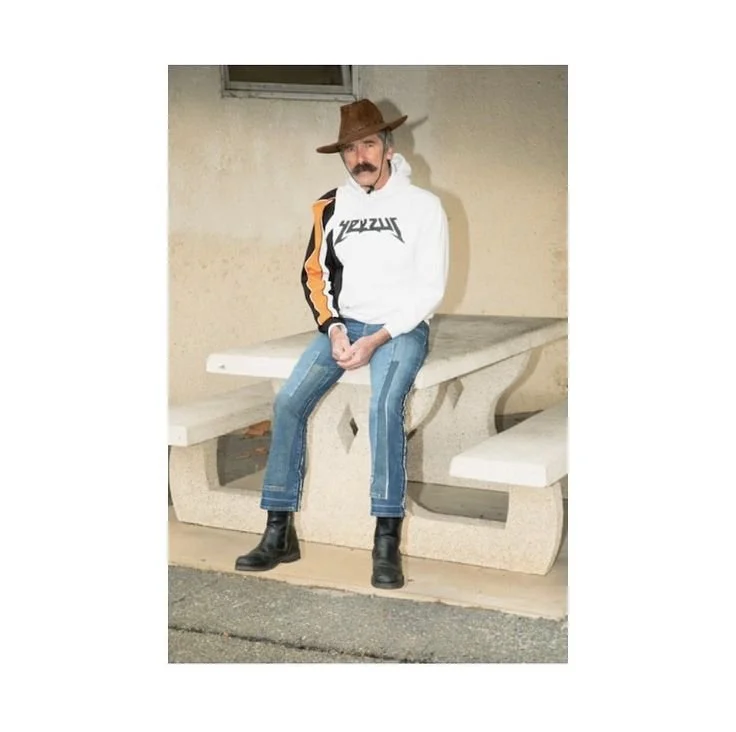
It’s a project I started with a tech giant, Vente Privée, now called VeePee.
It’s owned by an iconoclast entrepreneur, a billionaire with long hair and crocodile boots. I liked his persona, and his business generated tons of stock.
I went to offer him my expertise just as he was entering the second-hand market. He had different types of unsold inventory, and I chose to focus on what I call “fast fashion’s trash”.
It’s a technique that values clothing for its material and history, less for its shape because we dismantle that shape.
Andrea Crews had always made sculptural clothing, we didn’t use traditional pattern-making. But to be able to scale the project, we only used pattern-making.
I made a unisex jean with a super beautiful cut from deadstock denim through patchwork techniques.
We worked with streetwear, these materials that aren’t typically valued but very graphic and super interesting.
We also used dress shirts. The idea was to create an everyday wardrobe, more limited.
It was a great adventure, with an even stronger message, this concept of textile valorization.
Can you tell us about Wise Women?
So Wise Women is an association, a circle of women in culture and creative industries. We meet up and our mission is to help younger women develop their creative projects. It’s mentorship, we meet with them and open our address books to them, our advice too.
I’ve always loved and wanted to be a part of a women’s circle. Women entrepreneurs’ groups, it was interesting but I never really related to what was available.
So, that’s what I do, I created my own adventure.
Who were your mentors or biggest inspirations?
Some artists that have deeply inspired me, I often mention Thomas Hirschhorn, a true master thinker.
I was a fine arts student, and he would have me work, he created workshops, we bought magazines, we cut them up together. There were constraints, but so much freedom.
That’s how I work now too, through impulse.
One of my other art professors, the artist Anita Molinero, takes green, yellow trash bins from the streets, she burns them to make sculptures—sculptural valorisation of trash.
Another artist is Erwin Wurm, who made One Minute Sculptures. He would wear a sweater on his legs like what I have done. There is a lot of humour in his way of working.
Throughout Andrea Crews, I was also mentored by pros. Patricia Romate and Jérôme Elferre from the French Fashion Institute helped me develop and think of what a fashion brand is.
We were supported by so much energy from artist friends. They helped us with open hearts to do some crazy stuff to carry this creative frenzy that also made them happy.
That’s really Andrea crews’ MO, to offer a space for freedom without any financial rapport.
Where is Andrea Crews today?
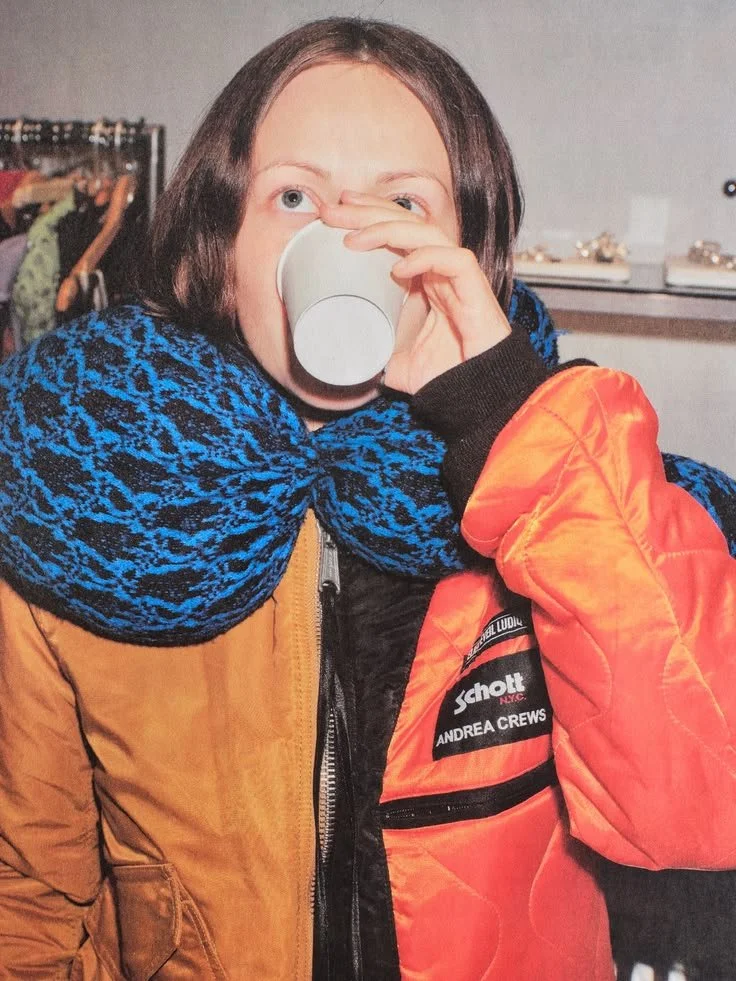
I’m really in a period of questioning and transformation, focusing on personal projects.
I’ve radicalised my approach to second-hand clothing and wild casting exclusively, a much more social project. I’m developing artist projects in this way.
For the past year, I’ve been working with the archives of Andrea Crews. Andrea Crews is a cult fashion brand from the early 2000s, a pioneer in upcycling.
But beyond just a fashion brand, it’s an entire movement. What is a fashion brand? What can you create from clothing? What are you really selling, at a time when people don’t actually need more clothes?
I ask myself all these questions to give the project the right direction.
How are you working with the Andrea Crews archives?
I’ve set up a boutique in the countryside, a boutique of works that holds around 300, maybe 350 pieces, they’re great, and the styles are timeless.
I’m trying to build a creative archive that can upcycle itself, that doesn’t always need to be recreated and that isn’t necessarily something to sell. Rather it’s inspiring material for performances or new creations.
I had worked on a project with the Centre Pompidou called Portrait d’une Génération.
I cast young people and dressed them in archive Andrea Crews to create their portraits, and is really very contemporary.
Afterwards, I keep the clothes, and through styling I can create so many different stories.
Why is it important to keep joy at the heart of Andrea Crews’ message?
Because we don’t know anything. Me, I have no claim to anything, except the desire to be alive and to share that joy.
Clothing is an excellent medium to talk about culture, inclusivity, and difference. Everyone gets dressed every day , every morning, everyone wears clothes_it’s a popular medium of deep self-expression or of everyday systemic societal problems.
So that’s how I think about joy and dressing up, to feel beautiful, it brings happiness, you make new friends, and you shape the world of tomorrow. It’s like sewing little by little to create something, a real piece, a real world.
Andrea Crews, it’s a space of resistance and freedom. We have a little bubble, it exists, it’s my universe, and I’m proud of it.
If there are many little bubbles like this, it’s a subtle force, but it’s a force.